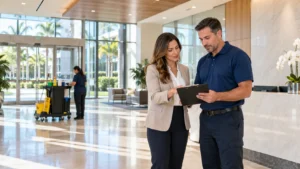
Medical offices require a higher standard of cleanliness than traditional commercial buildings. Healthcare facilities experience constant patient traffic, frequent contact with shared surfaces, and strict expectations regarding cleanliness and sanitation.
As a result, professional medical office cleaning involves much more than basic dusting and vacuuming. It includes detailed cleaning procedures designed to help healthcare environments remain clean, organized, and professional throughout the week.
Whether you manage a primary care practice, urgent care facility, outpatient clinic, or medical office building, understanding what is included in medical office cleaning can help you choose the right cleaning program for your facility.
What Is Medical Office Cleaning?
Medical office cleaning is a specialized commercial cleaning service focused on maintaining healthcare environments.
Unlike standard office cleaning, medical office cleaning places additional emphasis on:
- High-touch surface disinfection
- Patient-facing areas
- Infection prevention
- Consistent sanitation procedures
- Healthcare facility presentation
The goal is to create a cleaner environment for patients, healthcare providers, visitors, and administrative staff.
Waiting Room Cleaning and Sanitization
Waiting rooms are often one of the busiest areas within a healthcare facility.
Patients and visitors frequently come into contact with:
- Chairs and seating
- Reception counters
- Coffee stations
- Tables and surfaces
- Door handles
Professional medical office cleaning services typically include:
- Surface disinfection
- Furniture cleaning
- Dusting
- Trash removal
- Floor cleaning
Maintaining a clean waiting room helps create a positive first impression while supporting a healthier environment.
Exam Room Cleaning
Exam rooms require careful attention because they are used throughout the day by both patients and healthcare providers.
Cleaning services often include:
- Surface sanitization
- Cleaning treatment areas
- Dusting furniture and equipment surfaces
- Floor cleaning
- Trash removal
- Touchpoint disinfection
Regular cleaning helps maintain a professional healthcare environment and supports overall facility cleanliness.
Reception Area Cleaning
Reception areas are among the highest-traffic spaces in any medical office.
Professional cleaning programs typically focus on:
- Front desk cleaning
- Countertop disinfection
- Telephone and shared surface cleaning
- Dusting workstations
- Cleaning visitor-facing surfaces
A clean reception area helps reinforce professionalism and patient confidence.
Restroom Cleaning and Supply Restocking
Medical office restrooms require routine cleaning and sanitation throughout the week.
Services generally include:
- Toilet and urinal cleaning
- Sink and countertop sanitization
- Mirror cleaning
- Floor cleaning
- Trash removal
- Supply replenishment
Proper restroom maintenance contributes significantly to the overall appearance and cleanliness of a healthcare facility.
High-Touch Surface Disinfection
One of the most important components of medical office cleaning is the disinfection of high-touch surfaces.
These commonly include:
- Door handles
- Push plates
- Light switches
- Elevator buttons
- Shared equipment
- Countertops
- Handrails
These areas receive frequent contact throughout the day and require consistent cleaning attention.
Floor Cleaning and Maintenance
Healthcare facilities often have a variety of flooring surfaces that require routine care.
Medical office cleaning programs frequently include:
- Sweeping
- Mopping
- Vacuuming
- Floor polishing
- Spot cleaning
- Hard surface maintenance
Clean floors help improve the overall appearance of the facility while supporting cleanliness standards.
Breakroom and Staff Area Cleaning
Employee spaces are often overlooked but play an important role in maintaining a clean facility.
Professional cleaning services typically include:
- Countertop cleaning
- Appliance exterior cleaning
- Sink sanitization
- Trash removal
- Floor cleaning
- Surface disinfection
Clean breakrooms help create a more comfortable environment for healthcare staff.
Interior Glass and Common Area Cleaning
Many medical offices contain glass partitions, lobby windows, and shared common areas.
Medical office cleaning services often include:
- Interior glass cleaning
- Smudge removal
- Lobby cleaning
- Hallway maintenance
- Shared area sanitization
These services help maintain a professional appearance throughout the facility.
Trash Removal and Waste Management Support
Healthcare facilities generate significant amounts of daily waste.
Cleaning services generally include:
- Routine trash removal
- Waste bin cleaning
- Recycling collection
- Common area waste management
Proper waste handling helps maintain cleanliness and organization throughout the office.
How Often Should Medical Office Cleaning Be Performed?
Most healthcare facilities require recurring cleaning schedules based on patient volume and building activity.
Many facilities choose:
- Five-day cleaning schedules
- Six-day recurring service
- Seven-day maintenance programs
- After-hours cleaning services
The ideal schedule depends on:
- Patient traffic
- Facility size
- Number of treatment rooms
- Operating hours
- Type of healthcare services provided
Why Professional Medical Office Cleaning Matters
Medical facilities require dependable cleaning programs that support daily operations and maintain a professional environment.
Benefits of professional medical office cleaning include:
- Cleaner patient-facing areas
- Consistent sanitation procedures
- Improved facility appearance
- Better patient experience
- Reliable recurring service
Healthcare facilities looking for a structured and dependable cleaning program can learn more about our professional medical office cleaning services and how they help support healthcare environments.
Final Thoughts
Medical office cleaning involves much more than standard janitorial services. From waiting rooms and exam rooms to restrooms and common areas, healthcare facilities require consistent cleaning procedures that help maintain cleanliness, professionalism, and patient confidence.
By understanding what is included in medical office cleaning, facility managers and healthcare providers can make informed decisions when selecting a cleaning partner and building a cleaning program that supports their operational needs.